You Won’t Believe These Viewpoints in Medellín — I Was Speechless
Medellín, once misunderstood, now unfolds like a vibrant tapestry of color, culture, and breathtaking landscapes. From the moment I stepped into this transformed city, I knew it was different — not just in its warm climate or famous paisa hospitality, but in the way it reveals itself from above. The viewpoints here don’t just show scenery — they tell stories. Each hilltop offers a new perspective, both literally and emotionally, of resilience, reinvention, and beauty. If you’re looking for more than just a destination, but a feeling, Medellín delivers — especially when seen from these unforgettable vantage points.
Arrival in a City Reborn
Stepping off the plane into Medellín’s mild, spring-like air, one is immediately struck by the city’s embrace of life. Gone are the shadows of its troubled past; in their place rises a modern, green, and deeply human urban landscape. The transformation is not just anecdotal — it’s visible in the clean lines of the Metro system, the lush parks lining the streets, and the way communities thrive on steep hillsides once deemed inaccessible. For travelers, this renaissance is best appreciated not at street level, but from above — and Medellín makes that ascent both possible and meaningful.
The city’s innovative public transportation system is the quiet hero of this story. The Medellín Metro, opened in 1995, was the first of its kind in Colombia and remains a model of urban integration. But it’s the Metrocable — a gondola system that ascends into the mountainous barrios — that truly redefines access. What was once a barrier — the rugged terrain where informal settlements clung to the hills — has become a network of elevated pathways, connecting people and viewpoints alike. These cable cars don’t just move residents; they invite visitors to rise with the city, literally and symbolically.
As the gondola climbs, the urban fabric unfolds below: tiled rooftops, winding streets, and pockets of green where community gardens flourish. The blend of nature and city is seamless. Medellín sits in the Aburrá Valley, flanked by the Andes, and its geography naturally lends itself to panoramic observation. Unlike flat metropolises where skyline views require skyscrapers, here, elevation is built into the experience. You don’t need a luxury hotel rooftop — you need only take the Metrocable to Line K, heading toward Santo Domingo, to begin seeing Medellín as both a masterpiece of urban planning and a testament to human perseverance.
Why Viewpoints Matter in Medellín
In most cities, viewpoints are tourist attractions — places to snap a photo and move on. In Medellín, they are monuments to transformation. Each vantage point offers more than a sweeping vista; it provides context, history, and emotional resonance. These are not just scenic overlooks but symbols of how a city once defined by violence and fear has reimagined itself through inclusion, innovation, and investment in its people.
The hillside barrios, once isolated and neglected, were central to Medellín’s challenges — and its solutions. In the early 2000s, city leaders made a bold decision: instead of ignoring these communities, they would integrate them. The Metrocable was not just infrastructure; it was a statement. By bringing cable cars directly into neighborhoods like Santo Domingo and Arví, the city declared that these residents mattered, that their lives were visible, and that they deserved access to opportunity. Today, standing at a viewpoint overlooking these hills, one sees not just houses, but progress — painted walls, schools, libraries, and community centers built into the slopes.
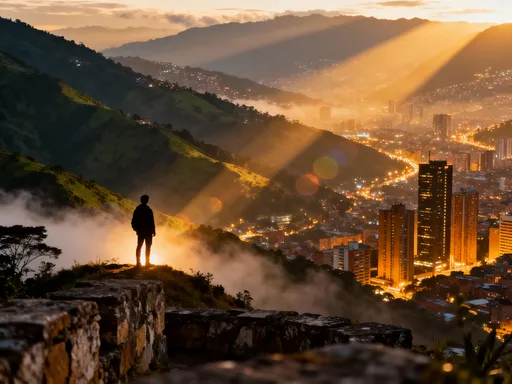
There is a quiet emotional power in viewing Medellín from above. It inspires a sense of connection — to the city, to its people, and to the idea that change is possible. From this height, the chaos of daily life softens into a pattern. Traffic becomes flowing ribbons, rooftops form a mosaic, and the valley glows under the Andean light. It’s a perspective that fosters humility and hope. Travelers often come seeking beauty, but they leave with something deeper: the understanding that cities, like people, can heal and grow.
Atop Cerro Nutibara: The Classic Panorama
No visit to Medellín is complete without a climb to Cerro Nutibara, one of the city’s most iconic viewpoints. Located in the northern district of Laureles, this hill has long served as a natural observatory. A short walk or taxi ride from the Poblado area, it offers one of the most comprehensive views of the Aburrá Valley, stretching from the southern neighborhoods all the way to the northern edge of the city.
At the summit, the Pueblito Paisa stands as a charming homage to Antioquian heritage. This full-scale replica of an 18th-century paisa village features stone houses with red-tiled roofs, flower-filled balconies, and cobblestone paths. While it may seem like a tourist attraction at first glance, its significance runs deeper. For locals, it’s a touchstone of cultural identity — a reminder of the rural roots that shaped Medellín’s character. Families gather here on weekends, children run between the houses, and vendors sell arepas and chocolatada, creating a warm, lived-in atmosphere.
The real magic of Cerro Nutibara, however, lies in its panoramic overlook. From the viewing platform, the city spreads out in every direction, framed by the green ridges of the Andes. On clear days, the contrast between urban development and natural beauty is striking. The Medellín River snakes through the valley, flanked by parks and bike paths. Skyscrapers in El Poblado rise alongside traditional homes, illustrating the city’s blend of old and new. Photographers favor sunrise for its soft light and minimal crowds, while sunset brings a golden glow that bathes the entire valley in warmth. Whether visited at dawn or dusk, Cerro Nutibara offers a moment of stillness — a chance to absorb the scale and spirit of this remarkable city.
Commune 13’s Skyline Story: Art and Ascent
If Cerro Nutibara represents Medellín’s past, Commune 13 embodies its future. Once known for violence and marginalization, this western neighborhood has become a symbol of urban renewal and cultural expression. The transformation is most vividly experienced through its outdoor escalators — a series of 12 interconnected stair lifts that climb 384 meters through the heart of the community. Installed in 2011, they were more than a convenience; they were a lifeline, reducing a 35-minute uphill walk to a 5-minute ride.
Today, the escalators are a pilgrimage for visitors. But the journey is not just vertical — it’s visual and emotional. The surrounding walls are covered in vibrant murals, each telling a story of resistance, memory, and hope. Local artists transformed blank concrete into a living gallery, where portraits of community leaders, indigenous symbols, and abstract expressions of peace cover every available surface. Guided tours, often led by residents, provide context, sharing personal histories and the neighborhood’s journey from conflict to creativity.
At the top, the view is unlike any other in the city. From this elevated perch, one looks back toward the center of Medellín, seeing the skyline from a perspective shaped by resilience. Rooftops stretch in every direction, some adorned with satellite dishes, others with solar panels or small gardens. Graffiti is not vandalism here — it’s dialogue. The air hums with life: music from open windows, the chatter of neighbors, the scent of frying plantains. This is not a postcard view; it’s a real, breathing community. And from this height, the city feels not distant, but deeply connected — a network of lives rising together.
Guarne Overlook and Hidden Gems Beyond the City
While Medellín’s urban viewpoints are powerful, some of the most breathtaking panoramas lie just beyond its borders. A short 30-minute drive east leads to the municipality of Guarne, where a quiet roadside overlook offers one of the most stunning wide-angle views of the Aburrá Valley. Nestled along the highway, this unassuming spot is often missed by tourists but cherished by locals and photographers seeking a less crowded vantage point.
From here, the valley unfolds in its full length, framed by rolling hills and dotted with patches of farmland. On clear mornings, a soft mist rises from the river, giving the city a dreamlike quality. The view captures Medellín not as a collection of buildings, but as a living organism — roads pulse with movement, parks breathe green into the urban grid, and the mountains cradle it all in quiet protection. Because it’s off the main tourist trail, the atmosphere is peaceful. Visitors can linger, sip coffee from a thermos, and watch the city awaken without the press of crowds.
Guarne is just one example of the hidden gems waiting beyond Medellín’s core. Other lesser-known spots include the Mirador de las Palmas in El Retiro and the hilltop church in La Ceja, each offering unique angles and intimate encounters with the region’s beauty. These places are not polished or commercialized. They may lack guardrails or signage, but they offer authenticity. For travelers seeking more than curated experiences, these quiet viewpoints provide a chance to connect with the landscape on a personal level.
When visiting such places, respect is essential. These are not theme parks but real communities. Travelers should park considerately, avoid loud behavior, and never trespass on private land. A simple greeting in Spanish, a smile, or a small donation to a local vendor goes a long way in building goodwill. The most meaningful travel experiences are not just about seeing — they’re about being seen as a respectful guest.
Parque Arví: Nature’s Observatory
For those seeking a deeper immersion, Parque Arví offers a seamless blend of nature, culture, and panoramic beauty. Located on the northeastern edge of the metropolitan area, this 1,600-hectare ecological reserve is accessible via the Metrocable Line L, which glides from the city into the cloud forest in under 20 minutes. The journey itself is part of the experience — as the gondola rises, urban density gives way to dense foliage, and the air cools with every meter gained.
At the park’s entrance, visitors are greeted with walking trails, educational exhibits, and open-air plazas shaded by native trees. The park was established in the 1990s as part of Medellín’s environmental restoration efforts, and today it serves as a sanctuary for biodiversity and a classroom for sustainability. Interpretive signs along the trails describe local flora and fauna, including orchids, hummingbirds, and the endangered Andean spectacled bear. Guided nature walks, often led by local naturalists, enhance the experience, offering insights into the region’s ecological importance.
Several trails lead to natural clearings with sweeping views of the valley below. The Mirador de los Pájaros, or Birdwatcher’s Lookout, is a favorite — a quiet platform surrounded by trees, where the only sounds are wind and birdsong. From here, the city appears small, almost delicate, nestled in the embrace of the mountains. It’s a humbling perspective, reminding visitors of nature’s scale and quiet dominance.
Parque Arví is also a cultural destination. The on-site market, Mercado de Arví, features local artisans and farmers selling handmade crafts, organic honey, and traditional paisa foods. Visitors can sample bandeja paisa — a hearty platter of beans, rice, meat, and plantain — or try lechona, a slow-roasted pork dish stuffed with rice and peas. These flavors ground the experience in the region’s culinary heritage, turning a day in nature into a full sensory journey. Families picnic on grassy lawns, children play near fountains, and elders share stories on shaded benches — a portrait of community life in harmony with nature.
The Human Viewpoint: Conversations That Changed My Perspective
Of all the views I experienced in Medellín, the most transformative were not from hilltops or parks, but from conversations with its people. In a café in El Poblado, an elderly woman named Carmen shared how she had lived through the city’s darkest years and now marveled at its peace. “We didn’t think we’d see this,” she said, gesturing toward the bustling street. “Now, I walk everywhere. I feel safe. I feel proud.” Her words carried the weight of lived history.
In Commune 13, a young muralist named Javier explained how art had given him purpose. “Before, there were only guns,” he said. “Now, we paint our dreams.” His hands were stained with pigment, his eyes bright with conviction. These stories — shared in plazas, on cable cars, in market stalls — added depth to every landscape I saw. The murals weren’t just colorful; they were testaments. The escalators weren’t just functional; they were symbols of dignity.
Traveling with openness, not just a camera, changed everything. When I stopped to ask a vendor about her arepa recipe, when I listened to a guide’s personal memories, when I simply said “gracias” with eye contact and a smile — I wasn’t just observing; I was connecting. These moments reminded me that the most powerful perspective is human. Cities are shaped by policies and infrastructure, but they are defined by the people who live in them. To see Medellín fully is to see its heart — beating strong, resilient, and full of hope.
Conclusion: Seeing More Than a City
Medellín’s viewpoints do more than showcase scenery — they invite reflection. From Cerro Nutibara’s timeless panorama to Commune 13’s vibrant ascent, from the quiet overlook in Guarne to the cloud forests of Parque Arví, each vantage point offers a lesson in resilience, beauty, and the power of community. But the true elevation comes not from altitude, but from understanding.
This city teaches us that progress is possible, that even the deepest wounds can heal, and that inclusion can transform not just neighborhoods, but entire ways of seeing. When we climb to these heights, we don’t just see a city — we see what cities can become. We see what people can achieve when given opportunity, dignity, and a chance to rise.
For travelers, especially those seeking meaningful, enriching experiences, Medellín offers a model. It challenges us to look beyond stereotypes, to engage with places and people with curiosity and respect, and to recognize that every destination has layers waiting to be understood. So, when you visit, take the cable car, climb the hill, pause at the overlook — but don’t stop there. Talk to someone. Listen. Let the view change not just your photos, but your perspective. Because in Medellín, the most unforgettable viewpoint is the one that changes you.