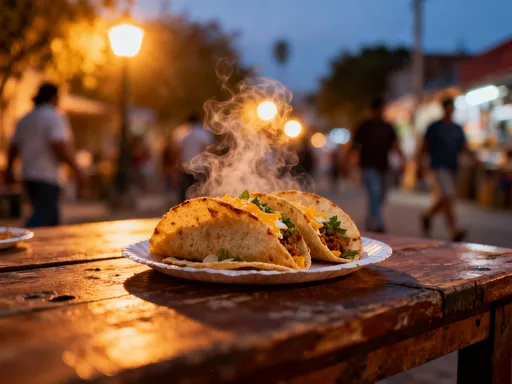
You Gotta Taste Rio’s Streets — Where Food Meets the Soul of the City
Imagine biting into a crispy pastel as samba beats pulse through the square, or sipping fresh coconut water under a palm-lined boardwalk. Rio de Janeiro isn’t just about beaches and mountains — its public spaces come alive with flavor. From bustling markets to sidewalk grills, food here isn’t just eaten; it’s experienced, shared, and celebrated in the open air. The city’s rhythm is seasoned with the sizzle of grills, the scent of tropical fruit, and the laughter of families gathered around food carts. This is a place where every corner offers a taste of tradition, where meals are not confined to restaurants but unfold in parks, plazas, and promenades. I’ll take you through the vibrant street food culture that turns Rio’s streets into a living, breathing culinary stage.
The Heartbeat of Rio: Food in Public Life
Rio de Janeiro’s climate and culture naturally invite life outdoors, and food is no exception. With sunshine nearly year-round and a deeply rooted tradition of socializing in open spaces, the city’s streets, squares, and waterfronts double as communal dining rooms. Eating outside is not merely a matter of convenience — it’s a way of connecting. Whether it’s a quick lunch between errands or a leisurely evening snack with friends, street food plays a central role in the daily rhythm of Carioca life. The term *comida de rua* — street food — carries more weight here than in many other cities; it’s not just sustenance, but a cultural expression, a shared ritual that brings people together across generations and neighborhoods.
This culinary tradition reflects Rio’s diverse heritage, drawing from African, Portuguese, and Indigenous roots in ways that are both flavorful and accessible. Dishes like *acarajé*, a deep-fried bean fritter of Afro-Brazilian origin, or *pão de queijo*, the cheesy bread with Indigenous-influenced cassava flour, are more than popular snacks — they are edible history. These foods thrive in public spaces because they are designed to be portable, satisfying, and quick to prepare. In Praça Mauá, for example, office workers gather at midday around food carts serving *lanches* — hearty sandwiches filled with ham, cheese, and sometimes a fried egg — often enjoyed standing up with a cold soda in hand. The plaza buzzes with conversation and the clatter of plastic trays, a symphony of urban life.
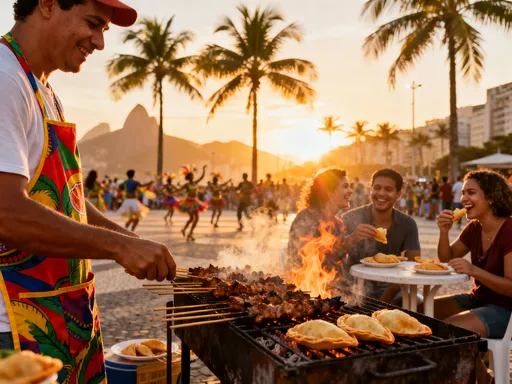
Similarly, in the evenings, the area around Arcos da Lapa becomes a magnet for locals and visitors alike, drawn by the energy of live music and the aroma of grilling meats. Here, food is part of the entertainment. Vendors sell *churrasquinhos* — small skewers of marinated beef or chicken — that are cooked fresh over open flames. The experience is sensory and social: the crackle of meat on the grill, the tang of lime squeezed on at the last moment, the shared bench where strangers exchange smiles over a common love of good food. These moments are not incidental; they are the essence of Rio’s public food culture — spontaneous, inclusive, and deeply rooted in community.
From Market Halls to Open-Air Counters: Where Flavor Lives
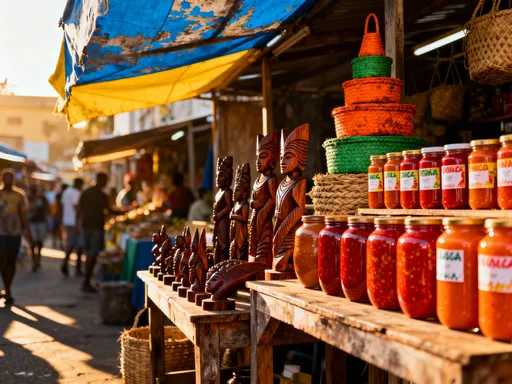
For a deeper dive into Rio’s street food soul, one must visit its markets — both formal and informal. The Mercado Municipal do Rio, often called “Mercadão,” stands as a cornerstone of the city’s culinary landscape. Housed in a grand early 20th-century building near Praça XV, the market is a feast for the senses. Inside, the air is rich with the scent of grilled cheese, cured meats, and tropical spices. Rows of stalls display pyramids of mangoes, passion fruit, and guava, while others specialize in ready-to-eat dishes like *feijoada* — the national black bean stew — served with rice, collard greens, and orange slices. It’s not unusual to see families gathered at communal tables, sharing platters of food as they chat and laugh, their voices blending with the clatter of cutlery and the calls of vendors.
Outside the formal market halls, Rio’s open-air food counters thrive with equal vibrancy. The Feira Nordestina in São Cristóvão is a prime example, a sprawling weekend market dedicated to the flavors of Brazil’s Northeast. Here, the influence of African and Indigenous cooking is especially strong. Visitors can find *carne de sol* — sun-dried beef — slow-cooked with coconut milk, or *baião de dois*, a comforting mix of rice, beans, and cheese. The market is alive with music, from forró to frevo, and the food is often served on disposable plates with a wooden fork — simple, authentic, and deeply satisfying. What makes these spaces so powerful is their ability to preserve regional traditions while serving a modern, urban population. They are not museums of cuisine, but living, evolving expressions of cultural pride.
In recent years, a new wave of food culture has emerged in Rio’s parks, where gourmet food trucks and pop-up stalls now share space with traditional vendors. Aterro do Flamengo, the expansive park stretching along Guanabara Bay, hosts weekly events where visitors can sample everything from artisanal empanadas to vegan açaí bowls. These events attract a diverse crowd — young professionals, families, tourists — all drawn by the promise of quality food in a scenic setting. The trucks are often run by young chefs who blend classic techniques with modern creativity, offering a fresh take on Brazilian flavors. Yet even in these contemporary settings, the spirit of public eating remains unchanged: food is meant to be shared, enjoyed slowly, and savored in the company of others.
Beachside Bites: Copacabana and Ipanema’s Snack Culture
No exploration of Rio’s street food would be complete without a visit to its legendary beaches. Copacabana and Ipanema are not just postcard-perfect stretches of sand — they are culinary destinations in their own right. Along the boardwalk, numbered kiosks known as *barracas* offer a rotating menu of local favorites. These small, brightly colored stands are more than snack stops; they are social hubs where beachgoers gather before, during, and after their time in the sun. The ritual is simple: a swim in the warm Atlantic, a towel laid out on the sand, and a post-dip refreshment from the nearest *barraca*.
Among the most popular offerings is *açaí na tigela* — a thick, frozen puree of açaí berries served in a bowl and topped with granola, banana slices, and sometimes honey or peanut butter. It’s a favorite for its refreshing taste and energy-boosting properties. Equally beloved is *caldinho de feijão*, a steaming cup of black bean broth, often enjoyed in the early morning or late afternoon when the ocean breeze carries a slight chill. For something heartier, many opt for a *misto-quente*, a grilled ham and cheese sandwich that emerges from the toaster golden and bubbling. Prices are modest — typically between 15 and 30 reais — and most kiosks operate on a cash-only basis, adding to the old-school charm.
Ordering at a *barraca* is part of the experience. Customers stand at the counter, often balancing a drink in one hand while scanning the menu board. Vendors are quick and efficient, but there’s always time for a friendly exchange. “Tudo bem?” (“Everything good?”) is more than a greeting — it’s an invitation to connect. These kiosks are not random concessions; they are public leases managed by the city, awarded through a formal process that ensures quality and consistency. This regulation helps maintain hygiene standards while preserving the informal, relaxed atmosphere that defines beachside dining in Rio. For many locals, the *barraca* is a second home — a place to meet friends, watch the sunset, and enjoy a simple meal with a view.
Street Food with a View: Eating Where the City Shines
Rio’s dramatic topography — its hills, cliffs, and panoramic vistas — adds a unique dimension to its food culture. Here, eating is often paired with sightseeing, creating moments where flavor and scenery enhance one another. In the bohemian neighborhood of Santa Teresa, for instance, the weekly *feirinha* (small fair) on Praça do Largo do Boticário draws crowds not just for its crafts and music, but for its food. Perched on a hilltop surrounded by lush greenery, the square offers sweeping views of the city below. Visitors sip on *caldo de cana* — fresh sugarcane juice — while nibbling on *pão de queijo* fresh from the oven, their golden crusts cracking with every bite.
Similarly, at the base of Sugarloaf Mountain, near the cable car station, small vendors sell *churros* and *milho verde* (boiled corn on the cob) to tourists and locals alike. After a ride to the summit, many return to ground level craving a warm, comforting snack. The churros, dusted with cinnamon sugar and sometimes filled with dulce de leche, are a perfect treat — sweet, satisfying, and easy to eat on the go. The location itself elevates the experience; standing near the water with the mountain rising behind you, every bite feels like part of a larger celebration of Rio’s beauty.
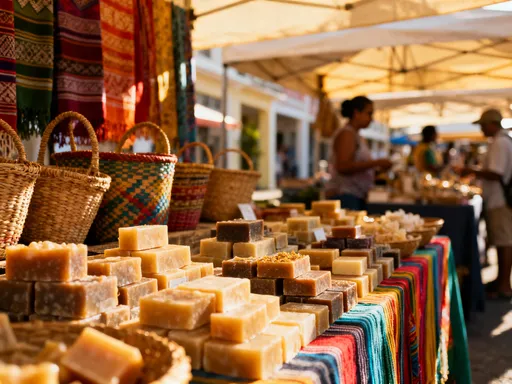
Weekend street fairs across the city serve a similar purpose, blending food, art, and community. In Ipanema’s Feira Hippie, one of the largest open-air markets in Latin America, dozens of food stalls line the perimeter, offering everything from organic juices to handmade pastries. Local producers sell artisanal cheeses, organic honey, and small-batch coffee, often with samples available. These events are not just shopping destinations — they are gatherings where people come to taste, to talk, and to be part of something larger. The food is fresh, the atmosphere is joyful, and the sense of connection is palpable. In these moments, Rio’s public spaces fulfill their highest purpose: not just to be seen, but to be lived in, one bite at a time.
The People Behind the Plates: Vendors as Cultural Keepers
Beyond the flavors and the scenery, the true heart of Rio’s street food culture lies in its people. Most vendors are not corporate employees, but individuals and families who have turned their culinary heritage into livelihoods. In Madureira, a neighborhood with deep Afro-Brazilian roots, a woman named Dona Marta has been frying *acarajé* for over thirty years. She follows her grandmother’s recipe, pounding dried black-eyed peas into a smooth paste, shaping them into balls, and deep-frying them in dendê (palm) oil — a technique passed down through generations. Her stall, a simple cart with a yellow umbrella, is a fixture at the local market. Regular customers greet her by name, and newcomers are welcomed with a patient explanation of how to eat the dish — hot, with vatapá (a creamy shrimp and coconut sauce) and caruru (a okra-based condiment).
Stories like Dona Marta’s are common across Rio. In the favelas and formal neighborhoods alike, street food is often a family enterprise, with recipes guarded like heirlooms. A man in Tijuca might sell *cachorro-quente especial* — an overstuffed hot dog with mashed potatoes, corn, and mayonnaise — using a sauce blend perfected by his father. In Barra da Tijuca, a young couple runs a food cart offering *tapiocas*, delicate crepes made from cassava flour and filled with cheese, coconut, or even Nutella. These vendors are more than entrepreneurs; they are cultural keepers, preserving flavors that might otherwise fade in the face of globalization and fast-food chains.
The city has recognized the importance of these small businesses and has taken steps to formalize and support street vendors. Programs like *Carioca da Gema* and *Rio Gastronomia* include street food in official city events, giving vendors visibility and legitimacy. Health and safety training, along with designated vending zones, help ensure that these traditions can thrive in a modern urban environment. For many families, street food is not just a passion — it’s a vital source of income. By protecting public space access, Rio ensures that these culinary traditions remain accessible to all, not just those who can afford restaurant prices.
Navigating the Scene: Practical Tips for Food Explorers
For visitors eager to dive into Rio’s street food culture, a few practical tips can make the experience safer and more enjoyable. First, carry cash — many vendors do not accept cards, especially in informal settings. While larger markets and food truck events may offer digital payment options, smaller stalls and beach kiosks typically operate on a cash-only basis. Having small bills on hand makes transactions smoother and shows respect for local customs.
Hygiene is another important consideration. Look for stalls with high turnover — a busy line is often a sign of fresh food and satisfied customers. Vendors who handle money and food with separate hands, or who use gloves and tongs, are generally more careful about cleanliness. If in doubt, opt for foods that are cooked to order or served hot, as heat helps reduce the risk of contamination. Bottled water and sealed drinks are recommended, especially in crowded areas.
Timing matters, too. Weekday lunch hours, particularly between 12:00 and 14:00, offer the best variety, as many office workers flock to food carts near business districts. Sunday markets, like the one in Ipanema or São Cristóvão, are ideal for a more leisurely exploration, with live music and family-friendly energy. Avoid isolated or poorly lit areas at night, and stick to well-populated zones like Copacabana, Ipanema, or downtown plazas. Bringing hand sanitizer and wipes can provide extra peace of mind, especially when eating with your hands.
Finally, be open to discovery. Don’t hesitate to ask vendors what they recommend — a simple “O que você sugere?” (“What do you suggest?”) can lead to a memorable dish. Many locals appreciate the effort to engage, and the gesture fosters connection. Remember, street food in Rio is not just about taste — it’s about participation in a living culture.
Beyond the Bite: Why Public Food Culture Matters
Rio’s street food scene is more than a collection of snacks — it is a reflection of the city’s soul. In an era when urban life often feels fragmented and impersonal, these open-air food spaces offer something rare: authenticity, inclusivity, and joy. Unlike sterile food courts or chain restaurants, where experience is standardized and interaction minimized, Rio’s public food culture thrives on human connection. A shared bench, a smile from a vendor, the sound of laughter over a plate of *pastéis* — these small moments build community.
There is also a sustainability angle. Street food in Rio often relies on local ingredients, minimal packaging, and low overhead, making it an environmentally and economically resilient model. Farmers, fishermen, and small producers find direct access to consumers through markets and fairs, cutting out middlemen and preserving freshness. This short supply chain supports not only food quality but also regional economies.
Perhaps most importantly, these spaces are democratic. A judge, a student, and a street cleaner might all be eating *coxinha* from the same cart, united by taste rather than status. In a city marked by inequality, public food culture offers a rare moment of equality — a place where everyone is welcome, and the only currency is appetite. Preserving these spaces is not just about saving snacks; it’s about protecting the social fabric of the city.
To truly know Rio, one must eat like a Carioca — slowly, openly, and with delight. Sit on a plaza bench, order something you can’t pronounce, and let the city unfold around you. In the sizzle of the grill, the call of the vendor, and the warmth of shared food, you’ll find the pulse of Rio — alive, generous, and full of flavor. The streets are not just where the food is; they are where the city’s heart beats loudest.