Lost in the Pulse of Siberia: My Raw Ride Through Novosibirsk
Ever wondered what it feels like to dive into a city that nobody talks about but everyone should? I stepped off the train in Novosibirsk with zero expectations—and got hit with a full-sensory storm. From underground music dens to midnight strolls along the Ob River, this Siberian powerhouse surprised me at every turn. It’s not just Russia’s third-largest city; it’s a living, breathing hub of culture, grit, and unexpected warmth. Far from the polished facades of Moscow and St. Petersburg, Novosibirsk pulses with authenticity. It doesn’t perform for tourists—it simply lives. And in that unfiltered reality lies its charm. This is a place where science meets street art, where history rumbles beneath your feet on an iron railway bridge, and where a bowl of steaming pelmeni can feel like a quiet act of connection. This is not a city you pass through. It’s one you feel.
First Impressions: The Unexpected Energy of a Siberian Metropolis
Arriving in Novosibirsk by the Trans-Siberian Railway is like waking up in a dream you didn’t know you were having. After days of rolling through endless taiga and remote villages, the city emerges with a quiet confidence. The station itself, a grand structure of stone and glass, stands as a gateway to Siberia’s urban heart. Many travelers see it as just a transfer point—somewhere to switch trains on the way to Irkutsk or Vladivostok. But those who linger discover a metropolis that defies expectations. The air is crisp, yes, and winters are famously long, but the city thrums with life year-round. Wide boulevards, leafy parks, and a skyline dotted with modern glass towers contrast sharply with the Soviet-era apartment blocks that still define much of the cityscape. This duality—old and new, industrial and intellectual—is part of what makes Novosibirsk so compelling.
What strikes visitors most is the absence of the bleakness often associated with Siberia. Instead of gray monotony, there is color—murals on building sides, flower beds in roundabouts, and cafes with warm light spilling onto sidewalks. The city feels lived-in, not abandoned. It’s clean, well-organized, and surprisingly green. Parks like the Central Park of Culture and Recreation offer shaded paths and open-air theaters, while the Leninsky District buzzes with shopping centers and public squares. Public transportation is efficient, with a metro system that glides silently beneath the surface, connecting distant neighborhoods with ease. Unlike larger Russian cities, Novosibirsk doesn’t feel overcrowded or chaotic. There’s space to breathe, to walk, to pause.
The city’s energy is rooted in its identity as a center of innovation and education. While Moscow draws political power and St. Petersburg cultural prestige, Novosibirsk has carved its niche as a brain hub. It’s home to one of Russia’s most important scientific communities, and that intellectual current runs through the city’s veins. You can feel it in the way people talk, in the bookstores that stock philosophy and physics alongside novels, in the quiet pride residents take in their city’s contributions to research and technology. This isn’t just a stopover. It’s a destination with depth, a place where the pulse of Siberia beats strongest.
Crossing the Ob: A Walk Across the Iconic Railway Bridge
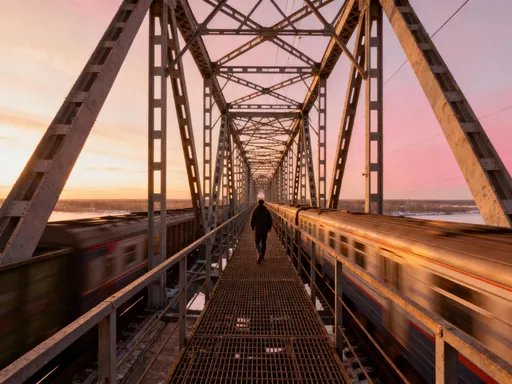
One of the most unforgettable experiences in Novosibirsk is walking across the historic Trans-Siberian Railway Bridge over the Ob River. Officially known as the Kommunalny Bridge, this structure is more than a crossing—it’s a symbol of connection. Built in the early 20th century, it played a crucial role in the development of Siberia, linking European Russia with the Far East. Today, it remains a vital artery, with freight and passenger trains thundering across it day and night. But what many don’t realize is that pedestrians can walk along a dedicated pathway on the south side, offering a rare, up-close encounter with one of the world’s most famous rail lines.
The walk begins on the left bank, near the railway station. As you step onto the bridge, the sound of approaching trains vibrates through the metal grating beneath your feet. Then comes the roar—a powerful diesel engine hurtling past, just meters away, its force shaking the air. It’s exhilarating, even a little humbling, to stand so close to such raw movement. Yet, the pathway is safe and well-maintained, separated from the tracks by sturdy fencing. The views are panoramic: the wide, slow-moving Ob River stretches out below, flanked by forested banks and distant hills. In summer, the water glints under the sun; in winter, it freezes into a vast, white expanse dotted with ice fishermen.
Midway across, you’ll often find local musicians playing guitar or accordion, their melodies blending with the rhythm of passing trains. Street artists sometimes set up easels, capturing the scene in quick strokes. It’s a spontaneous performance space, open to all. The best time to walk the bridge is either early morning or late evening, when the light is soft and the crowds are thin. Sunset is particularly magical, as the sky turns pink and gold, reflecting off the river’s surface. For travelers, this crossing isn’t just a photo opportunity—it’s a moment of immersion in the city’s history and heartbeat.
Inside the Akademgorodok Bubble: Science, Coffee, and Intellectual Vibes
No visit to Novosibirsk is complete without a journey to Akademgorodok, a unique scientific town nestled about 20 kilometers south of the city center. Founded in the late 1950s as a Soviet-era research hub, Akademgorodok was designed to be a sanctuary for the country’s brightest minds. Today, it remains a thriving center of academic excellence, home to dozens of research institutes, a university campus, and a community of scientists, students, and intellectuals. But what makes it remarkable is how seamlessly this world of discovery blends with everyday life. Here, science isn’t locked behind lab doors—it spills into cafes, parks, and public conversations.
Walking through Akademgorodok feels like stepping into a different Russia. The architecture is modernist and functional, with low-rise buildings surrounded by pine forests and walking trails. The air is quieter, cleaner. Students in hoodies and backpacks hurry between lectures, often deep in discussion about quantum mechanics or climate modeling. Cafes near the university are filled with people reading, writing, or debating—some in Russian, others in English or German. One popular spot, a small coffeehouse called “Ucheny,” serves strong espresso and homemade pastries. Its walls are lined with books and whiteboards covered in equations. It’s not unusual to overhear a conversation about neutrino detection while waiting for your cappuccino.
What’s striking is the openness of the community. Researchers are often willing to talk about their work, not with condescension, but with genuine enthusiasm. Many see science as a shared endeavor, not an elite pursuit. This spirit extends to public events—lectures, film screenings, and science festivals are regularly held and well-attended. For visitors, Akademgorodok offers a rare glimpse into a society that values knowledge not for profit or power, but for its own sake. It’s a reminder that innovation thrives not in isolation, but in community.
Underground Sounds: A Night at a Local Live Music Venue
Beneath the city’s academic and industrial surface lies a vibrant, unfiltered music scene. Novosibirsk’s youth express themselves not in grand concert halls, but in dimly lit basements and converted warehouses. One such place is “Podval,” a live music club tucked beneath a nondescript building in the city center. There’s no flashy sign, just a small door and a hand-painted poster. Inside, the air is thick with anticipation. The room is small, the stage low, the acoustics raw. This is where local bands test new songs, where fans sing along to lyrics they’ve memorized, where music feels alive and immediate.
On the night I visited, a trio called “Zvezda” took the stage—two guitars and a drum set, all playing original songs in Russian. Their sound was a blend of post-punk and folk, with poetic lyrics that spoke of longing, resistance, and quiet hope. The crowd, mostly in their twenties and thirties, swayed and clapped, some with eyes closed, others recording on phones. The energy was electric but intimate, like being part of a secret gathering. Drinks were inexpensive—beer and kvass served in plastic cups—and the vibe was refreshingly unpretentious. No VIP sections, no celebrity culture. Just music, people, and a shared moment.
What makes Novosibirsk’s music scene so powerful is its authenticity. These artists aren’t chasing fame or viral hits. They’re making music because they have something to say. Many sing in Russian, drawing from literary traditions and local experiences. Others experiment with global sounds—indie rock, electronic, jazz—filtering them through a Siberian lens. For travelers, attending a show like this is one of the most direct ways to connect with the city’s soul. It’s not about spectacle. It’s about presence. And in that presence, you feel the pulse of a generation shaping its own identity.
Museum Immersion: Stepping Into History at the Novosibirsk State Museum
To understand Siberia, one must visit the Novosibirsk State Museum of Regional Studies. Housed in a neoclassical building near the city center, this institution offers a comprehensive journey through the region’s past, from ancient times to the present. Its collections are vast and deeply informative, covering geology, anthropology, ethnography, and modern history. What makes it stand out is not just the breadth of its exhibits, but the care with which they are presented. Multilingual signage, interactive displays, and thoughtful curation make it accessible to both locals and international visitors.
One of the museum’s most impressive sections is its paleontological collection. Siberia is a treasure trove of prehistoric remains, and the museum displays fossils from the Paleozoic and Mesozoic eras, including massive ammonites and the skull of a woolly rhinoceros. These relics offer a glimpse into a world long gone, when mammoths roamed the tundra and the climate was vastly different. Equally compelling is the ethnographic wing, which showcases the cultures of Siberia’s Indigenous peoples—the Khanty, Mansi, Evenki, and others. Traditional clothing, tools, and ceremonial objects are displayed with respect and context, highlighting both the diversity and resilience of these communities.
The Soviet-era exhibits provide a sobering yet necessary perspective. Panels and artifacts trace the industrialization of Siberia, the construction of the Trans-Siberian Railway, and the forced labor camps that shaped much of the region’s development. The museum does not shy away from difficult topics, presenting them with factual clarity and minimal ideological framing. This balanced approach allows visitors to form their own understanding. For families, the museum also offers hands-on activities for children, including fossil digs and craft stations. It’s not just a place to learn—it’s a place to engage, to reflect, and to see Siberia not as a frozen frontier, but as a land of deep history and ongoing transformation.
Taste of Siberia: Eating Like a Local, One Bite at a Time
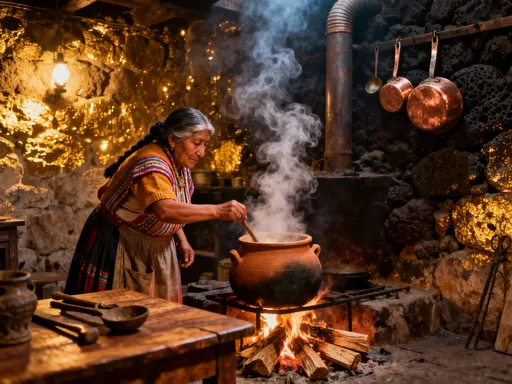
No journey is complete without tasting the local cuisine, and Novosibirsk offers a rich, comforting culinary tradition rooted in Siberian seasons and ingredients. One evening, I visited a modest restaurant called “Domashniy,” a no-frills dining spot popular with city residents. The menu was simple: pelmeni, borscht, pickled vegetables, and fish from the Ob River. There were no exotic fusion dishes, no Instagrammable plating—just hearty, honest food made with care. I ordered a bowl of pelmeni, Siberia’s beloved meat dumplings, served with sour cream and a slice of black bread. They were hand-folded, delicate yet substantial, each bite releasing a burst of savory broth.
Borscht arrived next, a deep red soup simmered with beets, cabbage, and beef. It was served hot, with a dollop of smetana (sour cream) that melted into the broth. The flavor was earthy, slightly sweet, and deeply satisfying—a perfect meal for a cool evening. Later, I tried omul, a fish native to Siberian lakes, lightly fried and seasoned with dill. Its flesh was tender, with a clean, smoky taste that spoke of open waters and cold air. What made the meal special wasn’t just the food, but the atmosphere. The staff greeted regulars by name. Families shared tables. A grandmother corrected her grandson’s grammar as they ate. There was no rush, no pressure to turn over tables. It felt like being invited into a home.
Siberian cuisine is shaped by necessity—long winters, short growing seasons, and a reliance on preserved and stored foods. Yet, it is far from monotonous. Pickling, smoking, fermenting, and baking are all elevated to art forms. Seasonal ingredients like wild mushrooms, berries, and river fish are celebrated when available. In summer, markets overflow with fresh produce; in winter, root vegetables and preserved goods sustain the population. For travelers, eating like a local means embracing this rhythm, savoring the simplicity, and appreciating the warmth behind every dish. It’s a cuisine of resilience and care—one that nourishes both body and spirit.
Evening Light on the Embankment: Finding Peace by the Water
As the sun begins to set, the Ob River embankment comes alive. Joggers lace up their shoes, couples stroll hand in hand, children chase bubbles blown by street performers. The air is cool, the light golden. This stretch of riverfront, recently renovated, has become one of the city’s most beloved public spaces. Wide pedestrian paths, modern benches, and open lawns invite people to linger. In summer, outdoor yoga classes gather at dusk; musicians play near fountains; artists sketch the skyline. It’s a place of movement and stillness, of community and solitude.
Walking along the embankment at this hour is a meditation. The river flows steadily, reflecting the sky and the city beyond. Barges pass silently, their lights flickering like stars. On the far bank, the silhouette of Akademgorodok rises gently against the horizon. The sounds are soft—laughter, footsteps, the occasional chime of a bicycle bell. There are no loudspeakers, no aggressive vendors, no sense of urgency. Just the quiet rhythm of daily life unfolding. It’s easy to forget you’re in Siberia, so often portrayed as harsh and remote. Here, by the water, the city reveals its softer side.
Public spaces like this are essential to Novosibirsk’s identity. They are where people from all walks of life come together—not as strangers, but as neighbors. The embankment doesn’t belong to any one group; it belongs to everyone. It’s maintained with care, respected by users, and cherished as a symbol of civic pride. For visitors, spending an evening here offers a different kind of sightseeing—one that doesn’t involve checklists or cameras, but presence and observation. Sometimes, the most meaningful travel moments aren’t the ones you plan. They’re the ones you stumble into, like a sunset by the river, when the world slows down and you remember why you travel in the first place.
Conclusion: Why Novosibirsk Deserves a Spot on Your Russia Itinerary
Novosibirsk challenges the traveler’s imagination. It exists outside the usual narratives of Russia—neither imperial nor touristy, neither chaotic nor cold in spirit. It is a city of substance, shaped by science, music, history, and the quiet dignity of everyday life. To visit is to move beyond stereotypes, to see Siberia not as a place of exile or endurance, but as a land of innovation, culture, and warmth. It reminds us that the heart of a country is not always found in its capitals, but in its overlooked corners.
From the rumble of trains on the Kommunalny Bridge to the hushed conversations in Akademgorodok cafes, from the raw energy of underground concerts to the comfort of a bowl of pelmeni in a local diner, Novosibirsk offers experiences that are immersive and authentic. It doesn’t cater to the camera—it invites participation. It asks you to walk, to listen, to taste, to stay awhile. And in return, it gives you something rare: a sense of connection to a place that few take the time to know.
For the curious traveler, especially those seeking depth over spectacle, Novosibirsk is a revelation. It proves that size isn’t the measure of significance, and that the least expected destinations often leave the most lasting impressions. So the next time you plan a trip to Russia, don’t just book a ticket to Moscow or St. Petersburg. Take the train a little further. Step off in Novosibirsk. Let the pulse of Siberia find you. Because sometimes, the loudest echoes come from the quietest places.