Finding My Balance: How Long-Term Stability Training Transformed My Mindset
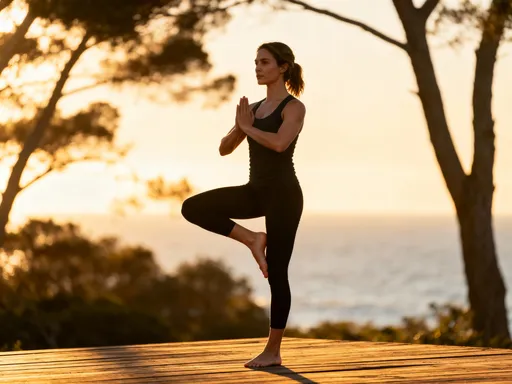
Living with constant mental and physical imbalance used to be my normal—until I discovered that true stability isn’t just about standing on one leg. Over years of consistent balance training, I didn’t just improve coordination; I reshaped my focus, patience, and emotional resilience. This journey wasn’t about quick fixes, but gradual, lasting shifts in how I move, think, and face daily challenges. What began as a simple effort to feel steadier on my feet evolved into a deeper understanding of self-awareness, presence, and inner strength. Balance, I learned, is not only a physical skill but a way of being—one that supports both body and mind through life’s inevitable shifts.
The Hidden Struggle: Recognizing Imbalance Beyond the Body
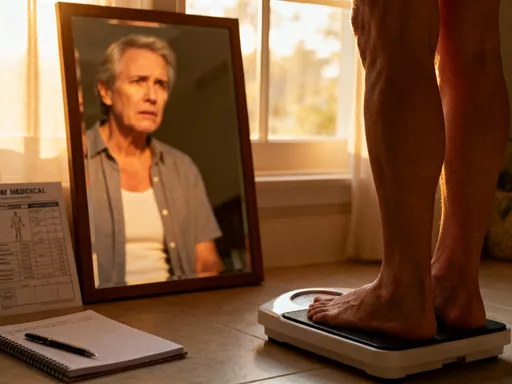
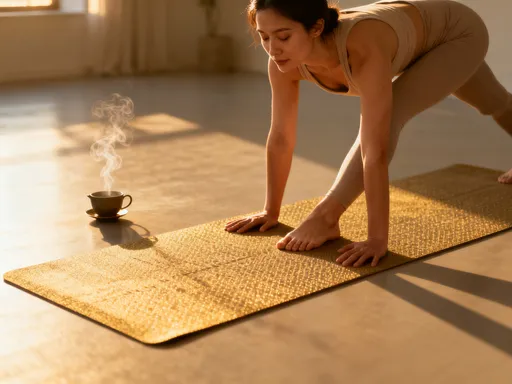
For years, I didn’t realize how much instability was affecting my life. I would lose focus easily, feel overwhelmed by small stressors, and struggle with low confidence—especially in new situations. At first, I assumed these were simply personality traits or signs of being overworked. It wasn’t until I began paying attention to my physical posture and coordination that I noticed a pattern: I often leaned to one side when standing, stumbled on uneven sidewalks, and had difficulty holding simple poses during yoga. These small signs pointed to a deeper issue—my body was not grounded, and neither was my mind.
What I came to understand is that physical imbalance is rarely isolated. It often reflects a disconnect between the body and the brain, particularly in how we process spatial awareness and movement. This internal sense, known as proprioception, allows us to know where our limbs are without looking. When it’s underdeveloped or ignored, it can contribute to poor posture, frequent tripping, and even a sense of mental fog. More importantly, research suggests that disrupted proprioceptive signals can affect emotional regulation, making us more reactive and less able to stay calm under pressure.
Traditional fitness routines often overlook this connection. Strength training builds muscle, cardio improves endurance, but neither directly challenges the subtle systems that keep us steady. I had spent years lifting weights and walking on treadmills, yet still felt uncentered. The missing piece was stability—the quiet foundation that supports every movement and thought. Once I began addressing it, I noticed changes not only in how I stood and moved but in how I responded to daily stress. My reactions became less impulsive, my focus sharper. It was as if improving my physical balance had reset something inside me that I hadn’t known was broken.
Why Balance Training? The Science Behind Stability and the Brain
The human body maintains balance through a complex network involving the inner ear, muscles, joints, and brain. At the core of this system is the vestibular apparatus in the inner ear, which detects head motion and spatial orientation. Signals from this system, combined with input from the eyes and sensory nerves in the feet and joints, are processed in the cerebellum—a region of the brain responsible for coordination and timing. What many people don’t realize is that the cerebellum also plays a role in attention, emotional control, and even decision-making.
Studies have shown that balance exercises stimulate neural plasticity—the brain’s ability to adapt and form new connections. When you stand on one leg or walk along a straight line, your brain is constantly making micro-adjustments, sending and receiving feedback in real time. This constant communication strengthens the pathways between sensory input and motor output, enhancing not just coordination but cognitive processing speed and mental clarity. Over time, these small neurological adaptations contribute to improved focus and reduced mental fatigue.
Another key benefit of balance training is its effect on interoception—the ability to sense internal bodily states such as heartbeat, breath, and muscle tension. Stronger interoception is linked to better emotional awareness and regulation. When you can tune into your body’s signals, you’re more likely to notice rising stress before it escalates. For example, someone with high interoceptive awareness might detect a quickened heartbeat during an argument and choose to pause before reacting. Balance exercises, by requiring sustained attention to posture and breath, naturally enhance this inner awareness.
One study published in the journal Frontiers in Psychology found that older adults who engaged in regular balance training reported not only improved physical stability but also reduced anxiety and better mood regulation. Similar results have been observed in younger populations, including office workers and caregivers—groups often dealing with chronic stress. These findings support the idea that balance is not just a physical attribute but a cornerstone of mental well-being. The brain learns stability not only in movement but in thought and emotion.
Starting Small: My First Steps Without Equipment or Expertise
I didn’t begin with elaborate routines or expensive equipment. In fact, my first real attempt at balance training happened while brushing my teeth. I simply stood on one foot in front of the sink, switching legs halfway through. It felt silly at first, but I noticed that even this small act required focus. My ankle wobbled, my arms flailed slightly for balance, and I had to concentrate to stay upright. After a few days, I could do it without grabbing the counter. That tiny victory gave me a sense of accomplishment—and sparked my curiosity to do more.
From there, I introduced other simple practices. I walked heel-to-toe along a hallway line, mimicking a sobriety test. I stood barefoot on a folded towel to simulate an uneven surface. I used a foam pad from a local store to create a soft, unstable base for standing exercises. None of these required special knowledge or a gym membership. The key was consistency: doing something small every day, even if it was just for two minutes. I didn’t aim for perfection—just presence.
What surprised me most was how quickly these micro-habits built confidence. At first, I worried about falling or looking awkward. But as my body learned to adjust, my mind followed. I became less afraid of making mistakes, more patient with myself. There was a quiet pride in mastering something so simple yet meaningful. Over time, I began to see balance not as a test of ability but as a practice of attention—a way to come back to myself in the middle of a busy day.
The accessibility of these exercises made them sustainable. Unlike high-intensity workouts that left me sore or drained, balance training felt gentle and restorative. I could do it in my living room, during a break at work, or while waiting for water to boil. It fit seamlessly into my routine, which made it easier to stick with. And because the progress was gradual, I didn’t feel pressured to achieve rapid results. Instead, I learned to appreciate the process—the small shifts in posture, the growing ease in movement, the quiet moments of focus that added up over time.
The Mind-Body Loop: How Physical Control Fuels Emotional Control
As my balance improved, I began to notice changes in how I handled stress. I used to react quickly when things didn’t go as planned—a delayed appointment, a miscommunication, a household mishap. My heart would race, my voice would rise, and I’d feel a surge of frustration before I could pause. But after months of balance practice, I found myself pausing more often. I could feel the tension rising, but instead of reacting, I would take a breath, ground my feet, and choose a calmer response.
This shift didn’t happen overnight. It emerged from the repeated experience of regaining balance—literally and figuratively. Every time I wobbled during a one-legged stand and corrected myself without falling, I reinforced a subtle but powerful lesson: I could recover. I didn’t have to stay off-center. That physical experience translated into emotional resilience. When I felt emotionally unsteady, I began to apply the same principle—acknowledge the wobble, adjust, and find my footing again.
The patience developed in balance training also influenced my decision-making. Holding a pose requires stillness, focus, and the ability to stay present despite discomfort. I learned to tolerate small amounts of physical challenge without rushing to escape. This translated into greater tolerance for uncertainty in daily life. I became more willing to sit with difficult emotions, to wait before speaking, to let situations unfold without forcing a resolution. It was as if my body had taught my mind a new rhythm—one of calm, steady response rather than impulsive reaction.
Self-trust grew alongside this awareness. Each small success in balance—standing a little longer, wobbling a little less—built a quiet confidence. I began to trust that I could handle challenges, not because I had all the answers, but because I had learned how to stay grounded. That sense of inner stability became a reliable anchor, especially during times of change or uncertainty. I no longer felt at the mercy of external events. Instead, I felt equipped with a skill that could support me, no matter what life brought.
Overcoming Plateaus: Staying Committed When Progress Slows
Like any long-term practice, balance training has its seasons of growth and stagnation. There were months when I didn’t feel any noticeable improvement. My one-legged stands stayed at 30 seconds. My heel-to-toe walks still had occasional missteps. Frustration crept in. I wondered if I was wasting my time, if I had reached my limit. It was easy to compare myself to others or to idealize faster progress. But during those moments, I learned that the real work wasn’t in the physical gains—it was in the mindset.
I began to reframe my goals. Instead of chasing longer holds or harder poses, I focused on presence. Could I stay aware of my breath? Could I notice the subtle shifts in my foot? Could I accept a wobble without judgment? These internal markers became just as important as external ones. I started keeping a simple journal, noting not just time or repetitions but how I felt—calm, distracted, impatient, focused. Over time, I saw patterns: on days when I was kinder to myself, my balance was better. On days when I rushed through the exercises, my body felt stiff and uncoordinated.
Mindfulness became a crucial tool. By bringing gentle attention to the present moment, I could observe my thoughts without getting caught in them. Instead of thinking, “I’m terrible at this,” I learned to say, “I’m having the thought that I’m terrible at this.” That small shift created space—a way to step back from self-criticism and return to the practice with curiosity. Self-compassion played an equal role. I reminded myself that progress isn’t linear, that rest is part of growth, and that showing up—even for two minutes—is an act of care.
These psychological tools kept me going when motivation faded. I stopped waiting for dramatic results and began to appreciate the subtle shifts: a deeper breath, a steadier gaze, a moment of stillness in a chaotic day. I realized that balance wasn’t just about the body—it was about learning to be with myself, exactly as I was. And that, perhaps, was the most transformative part of all.
Integrating Balance Into Daily Life: Beyond the Workout
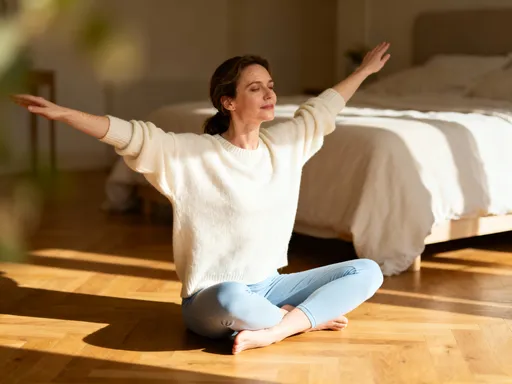
Balance training no longer feels like a separate activity. It has become a way of moving through the world. I walk with more awareness, feeling the contact of my feet with the ground. I sit with better posture, aligning my spine instead of slumping. I take short “grounding” moments throughout the day—standing barefoot on the floor, closing my eyes, and breathing deeply. These small practices reinforce both physical steadiness and mental presence.
Even routine tasks have become opportunities for mindful movement. While washing dishes, I stand with even weight on both feet. While waiting in line, I engage my core and relax my shoulders. These moments don’t require extra time—they simply ask for attention. Over time, they’ve helped me feel more centered, less scattered. I’m less likely to rush from one task to the next without pause. Instead, I move with intention, carrying a sense of stability from one moment to the next.
I’ve also noticed improvements in everyday physical tasks. I climb stairs more easily. I carry groceries without straining. I feel more confident walking on icy sidewalks or uneven terrain. These practical benefits are valuable, but the deeper change is in how I relate to my body. I no longer see it as something to fix or push through. Instead, I see it as a partner—one that responds to care, attention, and respect. This shift in perspective has made self-care feel less like a chore and more like a quiet commitment to well-being.
For other women in their 30s, 40s, and 50s—many of whom juggle family, work, and personal responsibilities—this kind of practice can be especially meaningful. It doesn’t demand hours of time or intense effort. It offers a way to reclaim a sense of control, not through force, but through presence. It’s a reminder that strength isn’t just about power—it’s about steadiness, resilience, and the ability to return to center, again and again.
A Lasting Shift: How Stability Changed My Relationship With Myself
Looking back, the most profound change hasn’t been in how I stand or move—it’s in how I see myself. Years of balance training have cultivated a deeper sense of inner calm, a quiet confidence that doesn’t depend on external validation. I’m less reactive, more thoughtful. I make decisions with greater clarity. I handle stress with more grace. These aren’t dramatic transformations, but quiet shifts that have added up over time.
I’ve learned that stability is not a destination but a practice. It’s not about achieving perfect stillness but about developing the ability to adjust, recover, and stay present. This mindset has spilled over into other areas of life. I approach challenges with more patience. I accept imperfection with more kindness. I trust myself more—not because I’m flawless, but because I’ve learned how to stay grounded, even when things feel uncertain.
For anyone feeling overwhelmed, distracted, or unsteady—whether physically or emotionally—balance training offers a path back to center. It’s not a miracle cure, nor does it promise instant results. But it does offer something enduring: a way to build resilience from the ground up. By starting small, staying consistent, and embracing the process, it’s possible to develop both physical steadiness and mental clarity.
In a world that often feels chaotic and fast-paced, the ability to stand steady—both literally and figuratively—has become my most valuable skill. It’s not about being rigid or unmovable. It’s about being rooted enough to move with confidence, flexible enough to adapt, and present enough to meet each moment with awareness. That, I’ve come to believe, is the true meaning of balance.